ph365 Probability in Casino Games
Mastering ph365 Probability in Casino Games: Your Guide to Smarter Betting
Welcome to the exciting world of online casino gaming, where luck meets strategy! At ph365, we believe that understanding the odds is key to enhancing your gaming experience and potentially improving your outcomes. This comprehensive guide will delve into the fascinating concept of probability in casino games, equipping you with the knowledge to make more informed decisions when you play on our cutting-edge mobile-first platform. Whether you're spinning the roulette wheel, hitting the blackjack table, or trying your luck on slots, grasping the basics of probability can transform your approach. We'll break down complex ideas into easy-to-understand explanations, provide practical tips, and show you how this knowledge can be applied across various popular casino games available right here at ph365, your premier online casino destination in the Philippines. Get ready to elevate your game and play smarter!
Table of Contents
- What is Probability in Casino Games?
- The House Edge: Understanding the Casino's Advantage
- Probability in Popular ph365 Casino Games
- Strategies and Tips for Using Probability to Your Advantage
- Common Misconceptions About Probability in Gambling
- ph365's Commitment to Fair Play and Transparency
- Frequently Asked Questions
What is Probability in Casino Games?
Probability is fundamentally the measure of the likelihood that an event will occur. In the context of casino games, it's about quantifying the chances of specific outcomes, such as hitting a certain number on a roulette wheel, getting a blackjack, or landing a winning combination on a slot machine. It's expressed as a number between 0 and 1, where 0 means the event is impossible and 1 means it's certain. Often, probabilities are converted into percentages for easier understanding.
For example, if you flip a fair coin, the probability of it landing on heads is 0.5 (or 50%), because there are two equally likely outcomes (heads or tails) and only one of them is heads. In casino games, calculating probabilities can be more complex due to the number of variables involved, but the core principle remains the same. Understanding these probabilities allows players to gauge the risk and potential reward of their bets, moving beyond mere guesswork to a more analytical approach. While probability doesn't guarantee wins, it provides a framework for making more informed decisions.
The House Edge: Understanding the Casino's Advantage
The house edge is a critical concept directly related to probability in casino games. It represents the inherent advantage the casino has over the player in any given game. Expressed as a percentage, the house edge is the expected percentage of a player's bet that the casino will keep on average over the long run. It's how casinos ensure profitability and maintain their operations.
For instance, if a game has a 2% house edge, it means that for every ₱100 bet, the casino expects to keep ₱2 over an extended period. This edge is built into the game's rules and payout structures, making it a mathematical certainty that, given enough play, the casino will always come out ahead. It's important to understand that the house edge doesn't mean you'll lose every time; it simply means the odds are slightly tilted in the casino's favor. Different games have different house edges, and smart players often gravitate towards games with lower house edges to maximize their potential returns. At ph365, we ensure all our games operate with transparent house edges, adhering to fair play standards.
Probability in Popular ph365 Casino Games
Let's explore how probability plays out in some of the most popular casino games available on the ph365 website and mobile platform:
Roulette
In European Roulette, there are 37 pockets (numbers 1-36 plus a single 0). The probability of hitting any specific number is 1/37, or approximately 2.7%. For a red/black bet, there are 18 red and 18 black pockets. The probability of landing on red (or black) is 18/37, or about 48.65%. The house edge comes from the single '0' pocket, which is neither red nor black, nor odd nor even.
Blackjack
Blackjack is one of the few casino games where skill can significantly influence the outcome. The probability of getting a blackjack (an Ace and a 10-value card) on your first two cards from a single deck is approximately 4.8%. The house edge in blackjack can vary greatly depending on the rules of the table and the player's strategy. By using basic strategy, players can reduce the house edge to as low as 0.5% in some variations.
Slot Machines
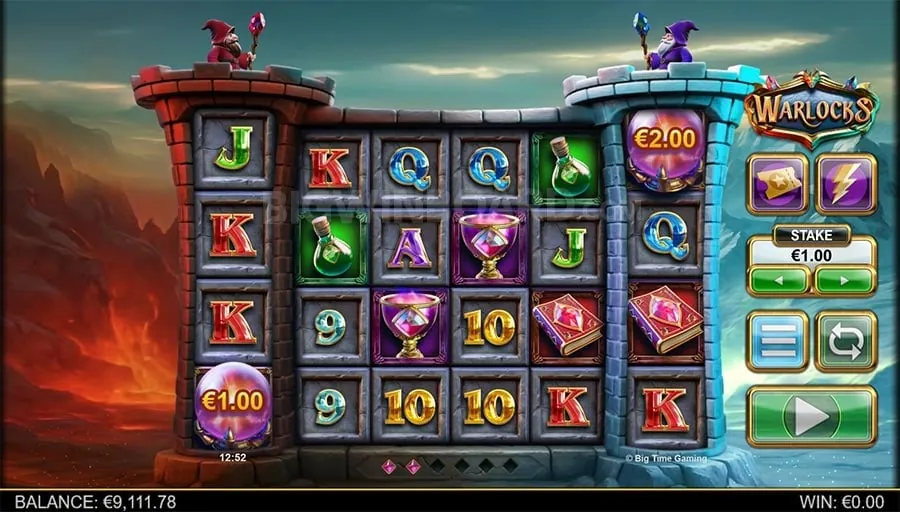
Slot machines operate on Random Number Generators (RNGs), making each spin independent of the last. The probability of hitting a jackpot or any specific winning combination is often very low, typically in the range of 1 in thousands or even millions. This is why payouts for jackpots are so high. Slot machines have a programmed Return to Player (RTP) percentage, which indicates the theoretical percentage of all wagered money a slot will pay back to players over time. A slot with a 96% RTP means that, on average, for every ₱100 wagered, ₱96 will be returned to players. You can find a wide variety of slots with competitive RTPs at ph365.
Baccarat
Baccarat is known for its simplicity and relatively low house edge. The three main bets are Player, Banker, and Tie. The Banker bet typically has the lowest house edge (around 1.06%), followed by the Player bet (around 1.24%). The Tie bet has a significantly higher house edge (around 14.36%), making it generally less favorable. Understanding these probabilities helps players make optimal betting choices in Baccarat.
Strategies and Tips for Using Probability to Your Advantage
While you can't change the inherent probabilities of casino games, you can use your understanding of them to make smarter decisions:
- Choose Games with Lower House Edges: Games like Blackjack (with proper strategy) and Baccarat often offer better odds than games with higher house edges, such as some slot machines or specific bets in Roulette. Explore the diverse range of games at ph365 casino to find your preferred low house edge options.
- Understand Game-Specific Strategies: For games like Blackjack and Video Poker, learning basic strategy charts can significantly improve your odds by guiding you to the mathematically correct decision in every situation.
- Manage Your Bankroll: Probability teaches us that losses are inevitable over time. A solid bankroll management strategy helps you withstand losing streaks and play longer, increasing your chances of hitting a winning streak.
- Avoid "Sucker Bets": In many games, there are specific bets with significantly higher house edges (e.g., the Tie bet in Baccarat, certain proposition bets in Craps). Knowing the probabilities helps you identify and avoid these less favorable options.
- Don't Chase Losses: This is a crucial psychological tip. When you're losing, the probability of winning the next hand or spin doesn't increase. Stick to your strategy and bankroll limits.
- Play for Fun: Remember that casino games are primarily a form of entertainment. While understanding probability can enhance your experience, it doesn't guarantee profits. Enjoy the thrill responsibly.
Common Misconceptions About Probability in Gambling
Many players fall prey to common misconceptions that can lead to poor decision-making:
- The Gambler's Fallacy: This is the mistaken belief that if an event has occurred more frequently than normal in the past, it is less likely to happen in the future (or vice versa). For example, if a coin lands on heads five times in a row, the probability of it landing on tails next is still 50%, not higher. Each spin of a roulette wheel or deal of cards is an independent event.
- "Due" Numbers: Similar to the gambler's fallacy, players might believe certain numbers in roulette are